
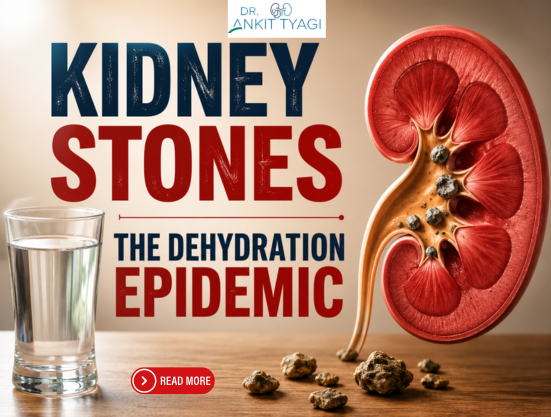
Kidney Stones — The Dehydration Epidemic
Kidney stone cases have been rising steadily over the past decade, and one of the biggest silent contributors is something most people overlook completely: chronic dehydration. What used to be considered an occasional, isolated problem has now become an epidemic-level concern, especially in cities with hot climates and high-stress lifestyles. As the best urologist in Old Rajender Nagar, Dr. Ankit Tyagi explains why staying hydrated is no longer optional, but essential for kidney health.
The Rising Kidney Stone Crisis
India has one of the highest incidences of kidney stones globally, and the numbers keep climbing every year. While diet and genetics play a role, dehydration remains the single most preventable and most ignored factor. Patients visiting the best urologist in Old Rajender Nagar often share the same pattern — long work hours, minimal water intake, and excessive reliance on tea, coffee, or sugary drinks instead of plain water.
How Dehydration Leads to Kidney Stones
1. Concentrated Urine
When water intake is low, urine becomes more concentrated with minerals like calcium, oxalate, and uric acid. This concentration makes it easier for crystals to form and eventually harden into stones.
2. Reduced Urine Flow
Adequate hydration keeps urine flowing regularly, flushing out mineral deposits before they can accumulate. Dehydration slows this natural flushing process significantly.
3. Increased Mineral Saturation
Low fluid volume means the kidneys have less liquid to dilute waste products, increasing the chances of mineral saturation and crystal formation.
4. Heat and Sweat Loss
In hot climates or during intense physical activity, fluid loss through sweat further concentrates urine if not compensated with adequate water intake — a pattern the best urologist in Old Rajender Nagar sees spike every summer.
Who Is Most at Risk?
-
Office workers who go hours without drinking water
- People in physically demanding jobs with high sweat loss
- Individuals with a high-sodium, high-protein diet
- Those with a family history of kidney stones
- People who frequently consume caffeinated or sugary beverages instead of water
- Patients with a history of recurrent UTIs or metabolic conditions
Symptoms You Shouldn't Ignore
Kidney stones can remain silent until they start moving, at which point symptoms appear suddenly and intensely:
- Sharp pain in the back or side, often radiating to the lower abdomen
- Blood in urine
- Nausea and vomiting
- Frequent urge to urinate
- Burning sensation while urinating
- Fever and chills, in case of infection
If any of these symptoms appear, consulting the best urologist in Old Rajender Nagar promptly can prevent complications like blocked urine flow or kidney damage.
Diagnosis and Treatment
Dr. Ankit Tyagi follows a systematic approach to diagnose and treat kidney stones effectively:
- Ultrasound or CT scan to determine stone size, location, and number
- Urine and blood tests to identify the type of stone and underlying metabolic cause
- Conservative management with hydration and medication for smaller stones that may pass naturally
- Minimally invasive procedures such as URS or RIRS for larger stones that require intervention
- Preventive counseling to reduce recurrence risk based on individual stone composition
This structured process is why patients across Old Rajender Nagar trust the best urologist in Old Rajender Nagar for both treatment and long-term prevention.
Simple Hydration Habits That Make a Real Difference
-
Aim for at least 2.5 to 3 litres of water daily, more in hot weather or during physical activity.
- Keep a water bottle visible on your desk as a constant reminder.
- Limit sugary drinks, excessive caffeine, and alcohol, which can worsen dehydration.
- Check urine color — pale yellow generally indicates good hydration.
- Increase water intake during exercise, travel, or illness.
- Include water-rich foods like cucumber, watermelon, and citrus fruits in your diet.
Why Prevention Matters More Than Treatment
Kidney stones have a high recurrence rate — once you've had one, your risk of developing another increases significantly. This is why the best urologist in Old Rajender Nagar emphasizes prevention as much as treatment. Simple hydration habits, combined with dietary adjustments, can dramatically reduce the chances of stones forming again.
Conclusion
Dehydration may seem like a minor everyday habit, but its long-term impact on kidney health is significant and often underestimated. What starts as simply "forgetting to drink water" can quietly evolve into a painful, recurring medical condition. If you're experiencing symptoms or have a history of kidney stones, don't wait for the pain to worsen. Dr. Ankit Tyagi, recognized as the best urologist in Old Rajender Nagar, offers comprehensive diagnosis, treatment, and prevention strategies tailored to your lifestyle and risk factors.
Stay hydrated, stay aware, and book a consultation if symptoms persist.
FAQs
Q1. Can dehydration alone cause kidney stones?
Yes, chronic dehydration is one of the leading contributing factors, as it concentrates minerals in urine, making crystal and stone formation more likely.
Q2. How much water should I drink to prevent kidney stones?
Generally, 2.5 to 3 litres per day is recommended, though this may increase based on climate, physical activity, and individual health conditions.
Q3. Do all kidney stones require surgery?
No. Many smaller stones pass naturally with adequate hydration and medication. Larger stones may require minimally invasive procedures for removal.
Q4. How can I tell if I'm at risk of kidney stones?
A family history of stones, low water intake, high-sodium diets, and recurrent UTIs are common risk factors. A urologist can assess your specific risk through tests and imaging.