
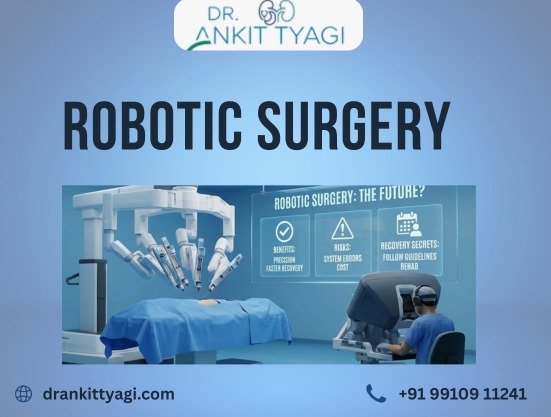
Is Robotic Surgery the Future? Benefits, Risks, and Recovery Secrets Explained!
Robotic surgery has transformed the field of urology over the past decade. With enhanced precision, smaller incisions, and faster recovery times, this advanced technique is enabling patients to achieve better outcomes than ever before. As more people seek minimally invasive solutions for prostate disorders, kidney diseases, ureteric problems, and other complex urological conditions, robotic surgery is rapidly becoming the preferred approach worldwide. At Sir Ganga Ram Hospital, patients receive highly specialized robotic surgical care under the guidance of Dr. Ankit Tyagi, ensuring a blend of accuracy, safety, and quicker healing. In this blog, we explore why robotic surgery is considered the future of urology, along with its benefits, risks, and what patients can expect during recovery.
What Exactly Is Robotic Surgery?
Robotic surgery is a minimally invasive procedure in which the surgeon operates using a robotic system.
It does not mean the robot performs surgery on its own. Instead:
● The surgeon controls the robotic arms
● Movements are incredibly precise
● Tools can rotate and move beyond normal wrist capabilities
● A 3D high-definition camera provides magnified visuals of the internal organs
When performed by the Best Urologist in Delhi, robotic systems enhance surgical accuracy and patient safety, especially in delicate areas like the prostate, kidneys, and bladder.
Why Is Robotic Surgery Becoming the Future?
1. Exceptional Precision for Complex Surgeries
Robotic arms can perform movements that are impossible for the human wrist.
This is especially valuable in:
● Prostate cancer surgeries
● Kidney tumor removal
● Ureteric reimplantation
● Pyeloplasty
● Reconstruction surgeries
Such precision helps avoid damage to surrounding nerves and tissues, improving long-term functional outcomes — especially when done by the Best Urologist in Delhi.
2. Smaller Incisions, Less Pain
Traditional open surgeries involve large cuts, more pain, and longer hospitalization.
Robotic surgery uses tiny incisions, which leads to:
● Minimal pain
● Reduced blood loss
● Faster discharge
● Lower infection risk
This makes robotic surgery safer for elderly patients and those with medical comorbidities.
3. Faster Recovery & Return to Routine
Because robotic surgery is minimally invasive:
● Patients walk within hours
● Hospital stay is usually 24–48 hours
● Normal routine resumes much sooner
● Scars are almost invisible
These advantages attract patients to advanced urological care provided by the Best Urologist in Delhi.
4. Better Cancer Outcomes
In urology, cancer surgeries require a balance of complete tumor removal while preserving function.
Robotic surgery offers:
● Clear tumor margin identification
● Enhanced visualization
● Better nerve preservation
● Reduced complications
This is particularly important for prostate and kidney cancer patients.
5. Greater Surgeon Control & Stability
Unlike human hands, robotic instruments do not shake.
This stability is crucial when operating on tiny structures like:
● Nerves
● Vessels
● Ureter
● Lymphatic tissues
Surgeons performing robotic surgery, such as the Best Urologist in Delhi, achieve higher accuracy and better results for their patients.
Are There Any Risks of Robotic Surgery?
Although robotic surgery is extremely safe, it is still a surgical procedure.
Some possible risks include:
● Temporary pain or discomfort
● Bleeding (less common than open surgery)
● Reaction to anesthesia
● Instrument or system failure (rare)
● Longer operative time in some cases
However, with an expert surgeon, these risks are significantly minimized.
This is why choosing the Best Urologist in Delhi is essential for safe and effective robotic treatment.
Who Is the Ideal Candidate for Robotic Surgery?
Robotic surgery is ideal for patients with:
● Prostate cancer
● Kidney masses
● Ureteric strictures
● Complex urinary tract reconstruction needs
● Pelvic organ surgeries
● Large or difficult-to-access tumors
A detailed evaluation determines suitability based on the patient’s condition, age, and medical history.
Recovery Secrets Most Patients Don’t Know
1. Hydration Boosts Healing
Drinking enough fluids helps the kidneys work better post-surgery.
2. Light Movement Prevents Complications
Gentle walking improves blood flow and speeds up healing.
3. Avoid Heavy Lifting for a Few Weeks
Even though incisions are small, internal healing takes time.
4. Follow Medication Strictly
Pain management, antibiotics, and stool softeners help recovery go smoothly.
5. Regular Follow-ups Matter
Reviewing progress ensures long-term success of the surgery.
Patients treated by the Best Urologist in Delhi often experience smooth recovery due to personalized post-operative care.
Conclusion
Robotic surgery is rapidly becoming the future of urology because it offers unmatched precision, reduced pain, faster recovery, and superior outcomes — especially for cancer and reconstructive procedures.
With advanced technology and expert hands, patients receive safer and more effective treatment options than ever before.
If you or a loved one is considering robotic surgery, the Best Urologist in Delhi can help you understand the procedure, evaluate your condition, and guide you toward the best treatment pathway.
FAQs
1. Is robotic surgery safe for urology patients?
Yes. Robotic surgery is one of the safest minimally invasive techniques and offers excellent outcomes.
2. How long does recovery take after robotic urologic surgery?
Most patients return to routine activities within 1–2 weeks.
3. Is robotic surgery better than open surgery?
Yes. It offers less pain, quicker healing, and more precision, particularly for prostate and kidney surgeries.
4. Does robotic surgery reduce complications?
Yes. Smaller incisions and better visualization lower the risk of bleeding, infection, and scarring.
5. Who should I consult for robotic surgery?
A qualified urology specialist. Consulting the Best Urologist inDelhi ensures expert evaluation and safe surgical care.